Resting to Recover: A Trauma-Informed Guide to Rest and Wintering
Most people think rest is simple. Sleep more. Take a day off. Slow down. Treat yourself.
But if you live with complex trauma, rest often feels confusing, frustrating, or just out of reach. You may try to rest and still feel exhausted, pull back and feel no relief, or carry guilt for wanting to stop at all.
This course helps you understand why.
Complex trauma changes the way the nervous system uses energy. Years of survival mode quietly drain emotional, mental, physical, social, creative, and spiritual reserves. Over time, exhaustion becomes normal, and what others call “tired” becomes your baseline.
In this course, you’ll explore exhaustion through a trauma-informed lens. Instead of asking what’s wrong with you, you’ll begin asking what your nervous system has been carrying. You’ll learn how different kinds of tiredness require different kinds of rest, why traditional self-care often falls short, and what real recovery looks like when safety, boundaries, and connection are present.
Drawing from Tim Fletcher’s teaching, each lesson includes gentle explanations, reflection questions, journaling prompts, and simple practices designed to help your system relax rather than push through.
This course is an invitation to truly winter—to pull back, replenish, and discover a gentler way of being, rooted in compassion, truth, and the fact that you are worthy of rest.
Get Access with the EVERGREEN Membership
Get unlimited access to Tim Fletcher Co’s Evergreen library for just $30 per month, or $300 per year. With new self-development courses added every month, you’ll always have fresh, practical tools to support your growth in areas like trauma recovery, boundaries, relationships, and personal transformation. Learn at your own pace, revisit lessons anytime, and build lasting change with guidance that’s both compassionate and deeply practical. See more details here.
*All prices are in Canadian Dollars.
Course Curriculum
-
Welcome Video
Introduction
-
“I’m doing all the right things, so why am I still so tired?” This lesson explains why exhaustion persists even when you try to rest. You’ll learn how survival mode quietly drains physical, emotional, mental, and relational energy, often without your awareness.
This module helps you shift out of self-blame and into understanding that exhaustion is not a failure. It’s information from a nervous system that has been working overtime to keep you safe.
Lesson • Video • Journal -
Rest is more than sleep, and fatigue is more than being tired. In this lesson, you’ll explore how trauma disrupts physical and mental rest, keeping the body tense and the mind overactive even during downtime.
You’ll learn the difference between passive and active physical rest, why overthinking is a survival strategy, and how to begin giving your brain permission to slow down. This lesson reframes brain fog and mental overload as signs of protection, not weakness.
Lesson • Video • Journal -
Emotional and social exhaustion are often the most overlooked forms of tiredness. This lesson explores how trauma teaches people to hide feelings, manage others’ emotions, or stay constantly “on,” leading to burnout and loneliness.
You’ll learn what emotional rest really looks like and how to begin choosing relationships and levels of connection that nourish rather than drain you. Rest here is about authenticity, boundaries, and allowing yourself to stop bracing.
Lesson • Video • Journal -
Trauma heightens sensory sensitivity and collapses creativity. This lesson explains why noise, screens, pressure, and constant stimulation can feel overwhelming, and why creativity often disappears when your system is depleted.
You’ll learn how sensory rest calms the nervous system and how creative rest restores inspiration without forcing productivity. This module gently reframes creative “blocks” as a need for spaciousness, not effort.
Lesson • Video • Journal -
In the final lesson, you’ll explore deeper forms of rest tied to meaning, values, and inner connection. Trauma often disconnects people from purpose and aliveness, leaving a sense of emptiness or numbness.
This lesson brings together everything you’ve learned and introduces the conditions required for rest to truly work: safety, healthy connection, boundaries, and consistency. You’ll leave with a clearer understanding of how to build a life where rest supports healing instead of triggering shame.
Lesson • Video • Journal -
This bonus section offers optional companions to help you deepen and integrate the themes of rest, safety, and recovery explored in the course. You’ll find trauma-informed teachings from Tim Fletcher, reflective books on rest and “wintering,” gentle somatic practices, and carefully chosen media that support nervous system regulation without pressure to perform or process. These resources are not meant to be completed, but explored slowly and selectively, helping you build a personal rhythm of rest that feels safe, meaningful, and sustainable within your season of healing.
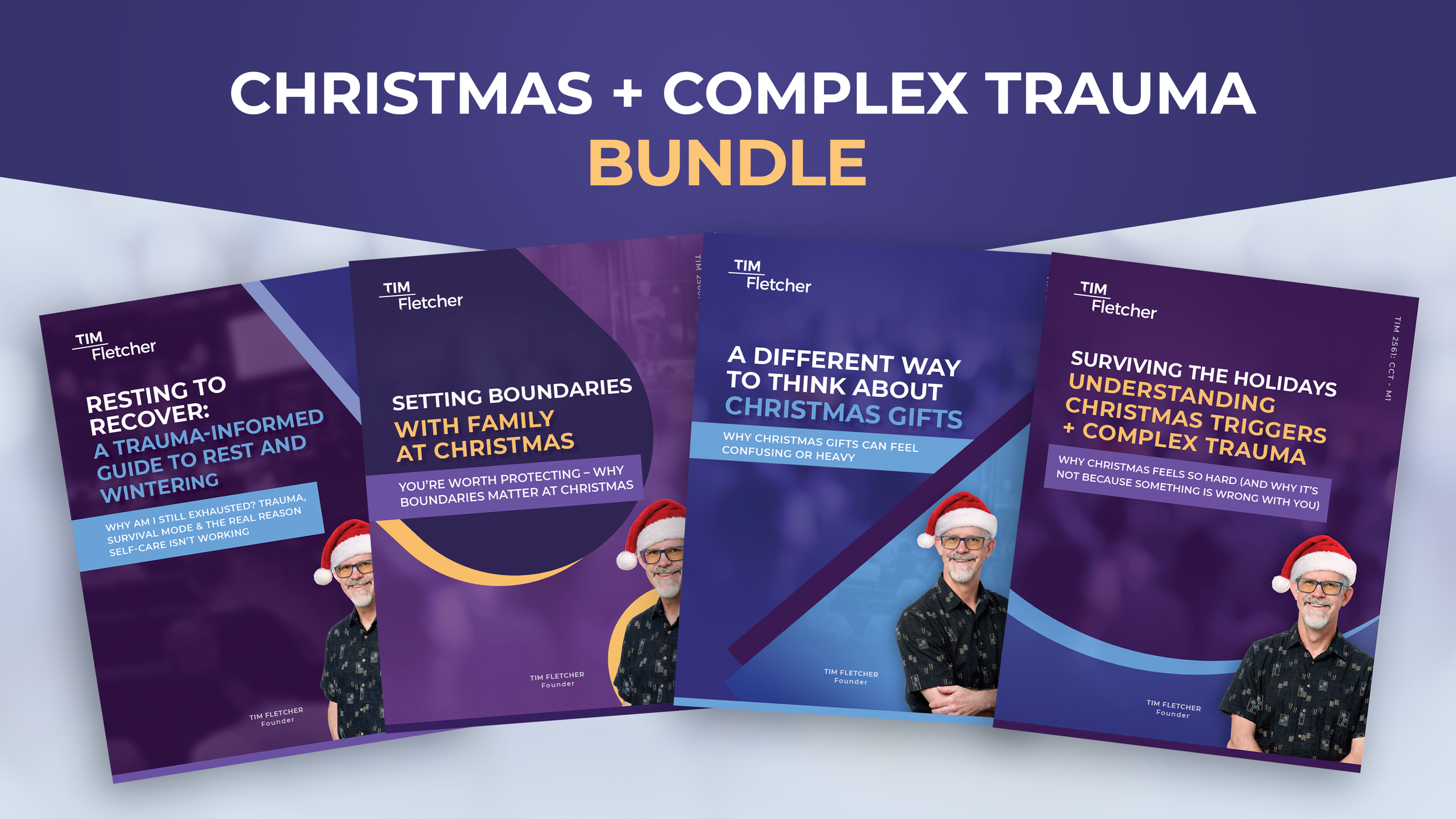
This course is included in the Christmas + Complex Trauma Bundle!
Save over 62% when you get all Christmas + Complex Trauma courses together! Includes: