Quieting the Inner Critic
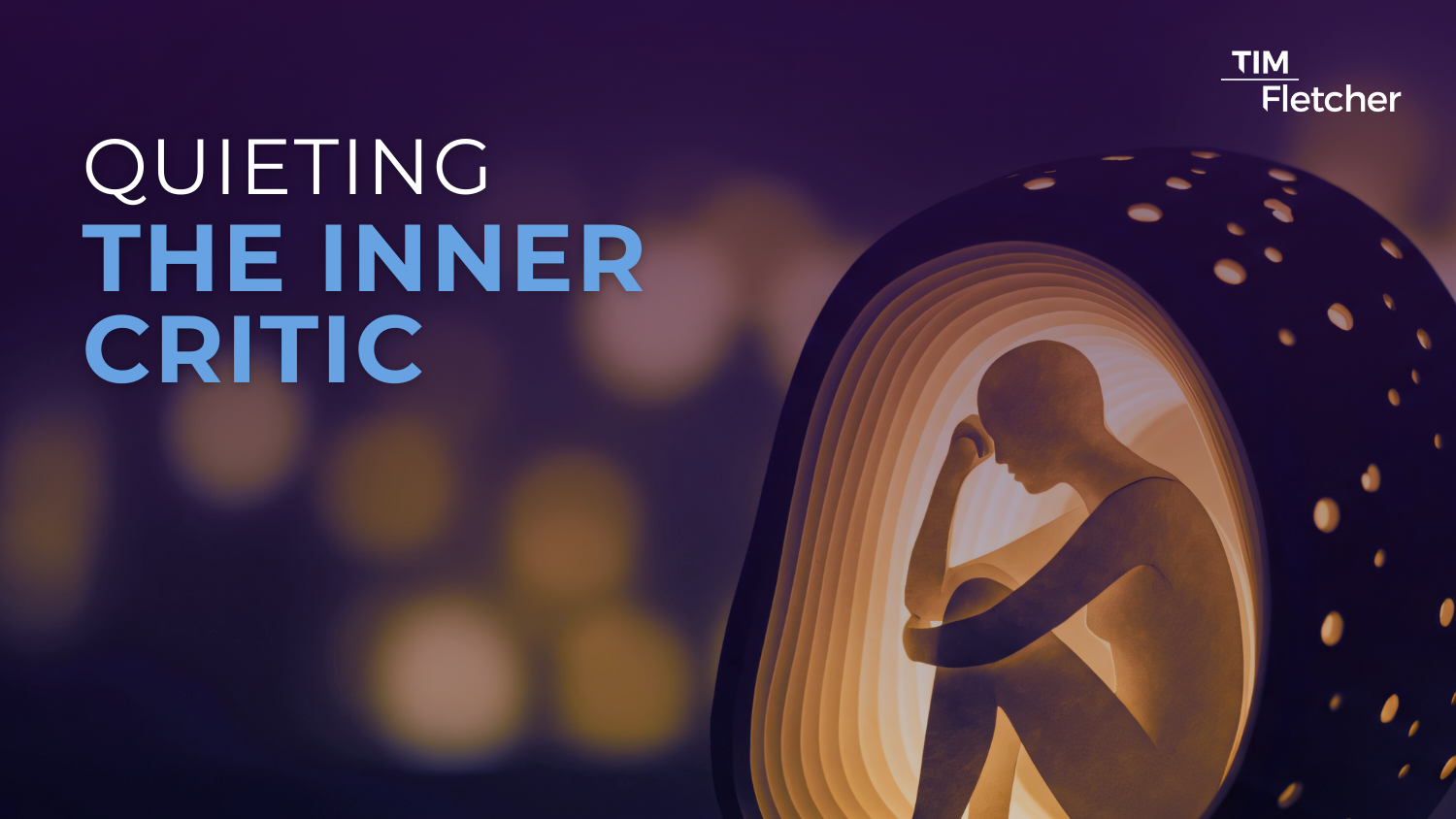
Many people living with complex trauma know the sound of an inner voice that never lets up — the one that says, “You’re not enough.”
It turns mistakes into evidence of failure and moments of rest into guilt. This course helps you understand where that voice came from and how to begin healing it.
You’ll explore how harsh self-judgment isn’t discipline or humility but a survival response: the internalized echo of people or experiences that once made you feel unsafe or unworthy. Through Tim Fletcher’s Complex Trauma-informed approach, you’ll learn how this voice formed, what keeps it active, and how to replace it with self-compassion that is both honest and kind.
Each lesson offers teaching, reflection, and simple practices to help you break the cycle of self-punishment and build a new relationship with yourself — one rooted in truth, gentleness, and safety. The goal isn’t to silence the inner critic, but to let compassion become the voice you trust most.
Get Access with the EVERGREEN Membership
Get unlimited access to Tim Fletcher Co’s Evergreen library for just $30 per month, or $300 per year. With new self-development courses added every month, you’ll always have fresh, practical tools to support your growth in areas like trauma recovery, boundaries, relationships, and personal transformation. Learn at your own pace, revisit lessons anytime, and build lasting change with guidance that’s both compassionate and deeply practical. See more details here.
*All prices are in Canadian Dollars.
Course Curriculum
-
Welcome Video
Introduction
-
This module explores how the inner critic develops in response to Complex Trauma, often as a misguided attempt to create safety and control. You’ll learn how early experiences of shame and conditional love shaped the harsh voice within—and how that voice has been trying, in its own way, to protect you. By naming the critic’s role and origin, you’ll begin separating your true self from its constant judgment.
Lesson • Video • Journal -
Here you’ll uncover how self-criticism operates in daily life: perfectionism, guilt, over-responsibility, and emotional shutdown. You’ll trace these reactions back to their roots in fear and unmet emotional needs, learning to identify triggers before they take over. This awareness creates the foundation for change, helping you interrupt automatic cycles of shame with curiosity and compassion.
Lesson • Video • Journal -
This lesson invites you to look past the critic’s hostility and hear the wounded part beneath it—the one still longing for safety, approval, or connection. You’ll practice translating self-attack into self-awareness, learning to ask, “What is this part trying to protect me from?” As empathy grows, you’ll start relating to your inner experience with gentleness instead of war.
Lesson • Video • Journal -
This module shows how shame-based self-punishment keeps you trapped in survival mode. You’ll explore why fear once felt like motivation, how guilt became mistaken for discipline, and what it means to shift from punishment to repair. Through practical tools like self-awareness, reframing, and restorative action, you’ll begin building trust in yourself—replacing self-attack with self-respect.
Lesson • Video • Journal -
In the final module, you’ll learn how compassion transforms the critic’s power. You’ll discover that gentleness isn’t weakness—it’s the foundation of healing, accountability, and courage. Through guided reflection, mindful awareness, and daily moments of warmth, you’ll learn to treat yourself as someone worth protecting. Compassion becomes not a concept, but a practice that rebuilds safety from within.
Lesson • Video • Journal -
This section includes carefully curated books, talks, music, and practices that deepen self-understanding and reinforce the lessons of this course. These resources support the lifelong process of softening harsh inner voices and developing a grounded, compassionate relationship with yourself—one built on truth, safety, and care.
FAQs
-
In this course, brain fog is explained as a protective response of the nervous system, not a personal weakness or loss of intelligence. When stress becomes overwhelming, the brain shifts into survival mode, which temporarily reduces access to clear thinking, memory, and focus.
The course helps you understand why this happens, how it developed, and what your brain is trying to protect you from—so you can respond with insight instead of frustration.
That’s why brain fog often appears suddenly—especially during stress, emotional pressure, or situations that unconsciously remind your body of past danger. It’s not random, and it’s not a failure. It’s your brain trying to keep you safe.
-
The short answer, no. One of the core teachings of this course is that brain fog is not a defect, but a learned survival strategy that often begins in childhood. Many people experiencing brain fog are highly capable and insightful—they just haven’t been taught how their nervous system works.
The course walks you through how to replace shame-based explanations with a trauma-informed understanding of what’s actually happening in your brain.
-
The course explains how stress chemicals, particularly cortisol, affect the thinking brain. When pressure increases, the nervous system prioritizes safety over clarity.
Understanding this pattern—and learning how to work with your nervous system instead of against it—is a central focus of the course and something many people find deeply relieving.
-
Pushing through brain fog often increases stress, which keeps the nervous system in survival mode. This course helps you understand why effort alone doesn’t restore clarity—and why safety and regulation come first.
Rather than offering quick fixes, the course teaches a different way of relating to yourself during fog, one that supports long-term clarity instead of burnout.
-
The course doesn’t treat brain fog as a standalone issue. It looks at the patterns underneath it—chronic stress, internal pressure, unmet needs, and trauma-based beliefs—that keep the fog returning.
By addressing these patterns gradually and compassionately, many learners begin to experience fewer shutdowns and more stable clarity over time.
-
This course is specifically designed through a complex trauma lens, using Tim Fletcher’s framework. Instead of generic productivity tips or surface-level coping strategies, it focuses on understanding the protective role of brain fog and how to gently reduce the stress that fuels it.
For many people, this perspective alone changes their relationship with brain fog—and becomes the foundation for deeper healing.