Numbness and Dissociation: Why I Feel So Far Away
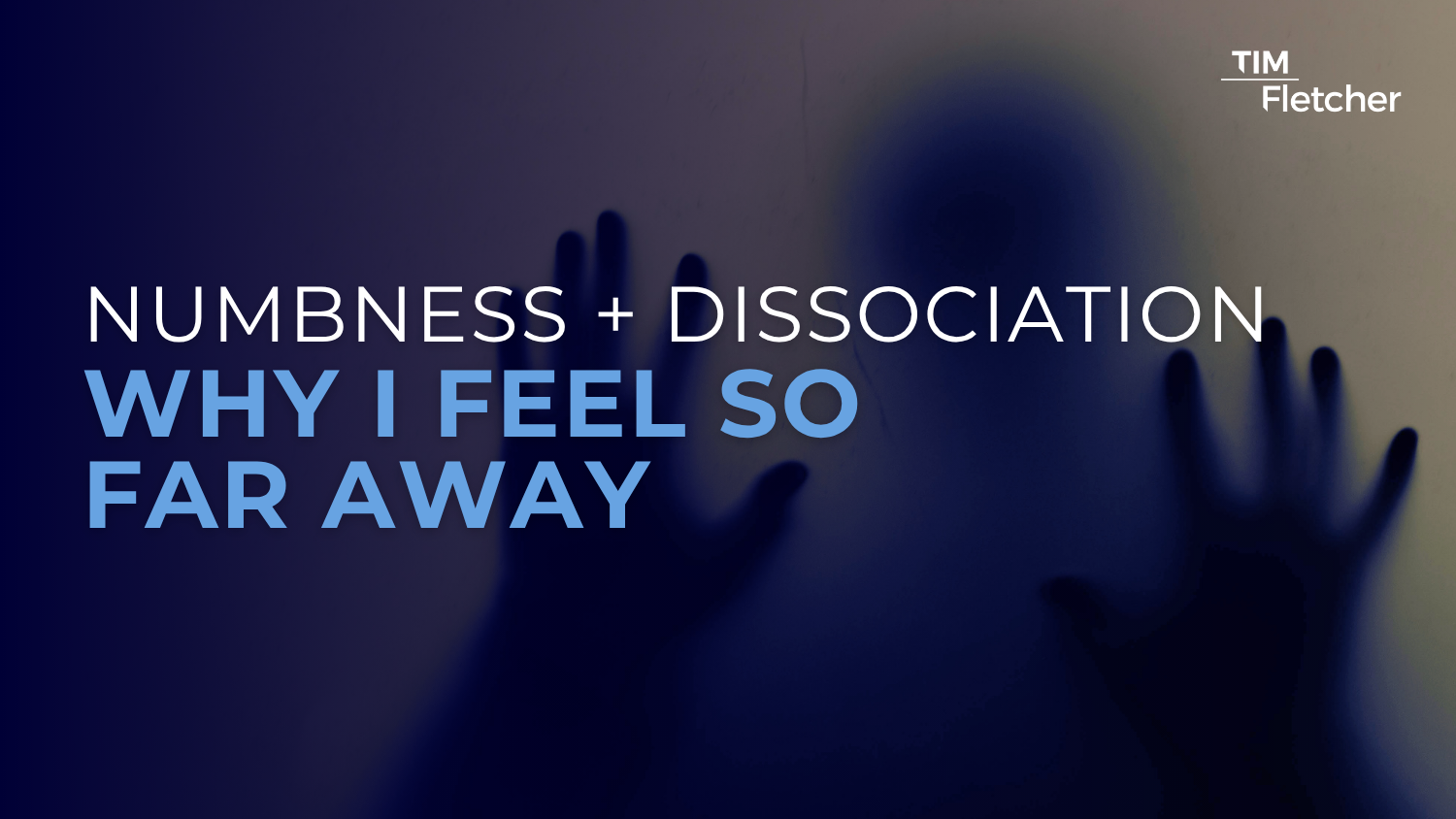
Do you sometimes watch your own life instead of living it, present in the room but somehow behind glass?
A fog that won't quite lift, a flatness where feeling should be, a sense of being far away even from the people you love most, none of it explained by anything obviously wrong.
In this course, you'll look at dissociation as the brain's third response to danger, alongside fight and flight, and how a child who cannot fight back or run learns to flee inward instead. You'll explore the many forms this "going away" can take, from trouble staying present and emotional numbing to constant busyness, daydreaming, and the more intense experience of watching yourself from the outside, and why an event only becomes traumatic through what happens inside a person rather than the event itself. You'll also examine one of the most common and hardest to spot forms of dissociation, not being present with the people right in front of you, and what that quietly costs partners and children.
By the end, you'll have practical ways to notice when you're starting to slip away, understand your own triggers and patterns, and use small, repeatable moments of mindfulness and connection to find your way back. Rather than asking you to stay present all at once, the course points toward learning that it is safe to come home to yourself, one small return at a time.

Get Access with the EVERGREEN Membership
Get unlimited access to Tim Fletcher Co’s Evergreen library for just $30 per month, or $300 per year. With new self-development courses added every month, you’ll always have fresh, practical tools to support your growth in areas like trauma recovery, boundaries, relationships, and personal transformation. Learn at your own pace, revisit lessons anytime, and build lasting change with guidance that’s both compassionate and deeply practical. See more details here.
*All prices are in Canadian Dollars.
Course Curriculum
-
A room can feel muffled and far off even while a person is sitting right in it. That distance is not spaciness; it is a door the brain built a long time ago.
This module introduces dissociation as the brain's third response to danger, fleeing inward when a small child is too little to fight or flee, and explains why it lives on a continuum, from mild drifting to deep disconnection.
In this module you'll:
Understand dissociation as the brain's third response to danger, after fight and flight.
See freeze as fleeing inward, disconnecting from the external world to stay safe.
Recognize dissociation as protection rather than spaciness or a defect.
Understand that dissociation lives on a continuum, deepening with danger.
Name the felt experience of "far away" in your own life.
Lesson • Video • Journal
-
Zoning out in a meeting and feeling completely unreal can look like two different problems. Underneath, they may be the same protective move taken to very different depths.
This module walks through the many forms dissociation can take, difficulty staying present, emotional numbing, constant busyness, escaping into fantasy and depersonalization, showing how each one is the same underlying move, going far away from something that once felt like too much.
In this module you'll:
Recognize the many forms dissociation can take, from everyday to extreme.
See difficulty staying present and focused as a form of going away.
Understand emotional numbing as a learned protection against getting hurt.
Recognize distraction and fantasy as ways of leaving the present.
Understand depersonalization, and where the far end of the continuum leads.
Lesson • Video • Journal
-
Two people can live through the exact same event and come away completely differently affected. What happens inside a person, not just what happened to them, decides whether something becomes trauma.
This module explains trauma through the three E's, Event, Experience and Effects, and shows why constant danger in childhood keeps the stress response running without a chance to switch off, so that going away, once exactly the right response, can outlive the threat it was built for.
In this module you'll:
Understand that trauma is not the event itself but what happens inside you.
Learn the three E's of trauma: Event, Experience and Effects.
See how the same event can traumatize one person and not another.
Understand Complex Trauma as ongoing danger requiring constant adaptation.
See how a healthy, life-saving adaptation becomes maladaptive in adult life.
Lesson • Video • Journal
-
A child can reach up, take a parent's face in two small hands, and physically turn it until their eyes meet. That gesture usually means the parent has already gone somewhere else.
This module looks at the most common and subtle form of dissociation, being physically present with someone while emotionally somewhere else, naming the everyday signs in how a person listens, reacts and wants space, and examining what that quiet absence costs the partners and children who most need presence.
In this module you'll:
Understand the most subtle and common form of dissociation: not being present in relationships.
See the difference between true presence and being physically there while emotionally absent.
Recognize the everyday signs of not being present, offered gently as a self-check.
Understand the cost of absence to partners and children.
Begin noticing, without shame, when you disappear from the people you love.
Lesson • Video • Journal
-
Losing track of a whole afternoon, or running on autopilot through a conversation, can be the first quiet sign of sliding away. Catching it early makes the way back easier to find.
This module introduces the warning signs that a person is sliding back into dissociation, usually tied to rising stress, and offers a path back through mindfulness, reconnecting with yourself and others, and learning your own triggers and patterns.
In this module you'll:
Recognize the warning signs that you are sliding back into dissociation.
Understand that these slides are usually connected to rising stress.
Learn to come back through mindfulness and reconnecting with yourself.
Learn to identify your triggers and your patterns, and to choose presence.
Understand that even the most extreme dissociation can heal, with support.
Lesson • Video • Journal