



BLOG: EXPLORE MORE COMPLEX TRAUMA TOPICS
Deepen your understanding with these articles on key aspects of complex trauma learning and recovery.

The Invisible Roots of Complex Trauma Recovery: Why Healing Must Begin Below the Surface
Have you ever asked, "Just give me the tools. Stop explaining. Just fix me"? We hear this often from survivors of complex trauma who are exhausted and desperate for change. But here is the truth you need to hear. You cannot change your external behaviors until you first change your internal world. The tools will not work unless you do the hidden work of healing what is below the surface.
If you have ever set a boundary only to cave, or decided to stop people-pleasing only to say yes when you meant no, this is not failure. This is a sign that you have been trying to grow upward without first growing downward. Your root system needs attention.
In this article, we explore three powerful lessons from nature about why the invisible work of healing must come first. The health of what is below determines the health of what is above. What is least visible is often most important.
Keep reading. Your recovery is not failing. It is just beginning to grow downward. And that is where the real transformation starts.

The Invisible Weight: Why Complex Trauma Makes You Afraid to Be a Burden
Do you hesitate to ask for help even when you are drowning? This quiet fear of being a burden is one of the most common signs of complex trauma. It is not a personality flaw. It is a survival adaptation, a lie that was given to you.
You give endlessly to others but cannot receive. You apologize for your pain and carry everything alone. But here is the truth that can change everything: your needs matter. They always have.
Healing is possible. Read on to discover where this fear comes from and how to break free.

Liminal Space: How Complex Trauma Leaves You Trapped in the Most Uncomfortable Part of Healing
Have you ever done something healthy for yourself, something you knew was right, only to be flooded with guilt, fear, and confusion the moment you did it?
You are not broken. You are not failing at recovery. You are in liminal space.
Liminal space is the uncomfortable in-between period where the old unhealthy normal is dissolving, but the new healthy normal is not yet fully formed. It is uncertain, vulnerable, and terrifying. It is also where genuine transformation begins.
For survivors of complex trauma, this space can feel like life and death. Letting go of old control patterns triggers our nervous system, making us feel like something bad is about to happen.
But here is the truth: the discomfort is not a sign that you are doing something wrong. It is a sign that you are doing something profoundly right.
In this article, we explore why liminal space feels so terrifying, what emotions to expect, and how to navigate this critical phase of healing. The answer may surprise you.
Read on to discover how the most uncomfortable part of recovery is actually the most essential part.

Is Your Attraction Actually a Trauma Response? Understanding Complex Trauma, the Nervous System, and Why We Chase the Wrong People
Have you ever found yourself inexplicably drawn to someone who feels familiar in a way that is almost unsettling? The chemistry is electric, the connection immediate, and yet something about the dynamic leaves you feeling anxious, depleted, or desperately trying to earn their approval.
You might have asked yourself: Why am I so attracted to people who are emotionally unavailable? Why do I feel most alive in relationships that are unpredictable or chaotic?
The answer may surprise you. What we often interpret as a magnetic pull toward someone may not be attraction at all. It might be a trauma response, an intricate survival mechanism rooted in complex trauma and wired deep within our nervous system.
In this article, we explore why our deepest longings can lead us into painful patterns and, more importantly, how we can begin to untangle trauma from true connection. We examine the nervous system's role in attraction, why we chase the wrong people, and how healing can fundamentally shift what we are drawn to.
If you have ever wondered why healthy love can feel boring or why you keep repeating the same painful relationship dynamics, this article is for you. Read on to discover how understanding your nervous system can transform your relationships and your healing journey.

The Family Scapegoat and Complex Trauma: When the Problem Child Was Never the Problem
What if the "problem child" in your family was never really the problem? What if the anger, the rebellion, and the acting out were actually a desperate cry of honesty in a house built on lies?
For those who grew up as the family scapegoat, the weight of being blamed for everything can feel like a life sentence. You were told you were "too much," "too difficult," or that you were the reason your family couldn't function. This experience is a profound source of complex trauma, leaving you with a shattered sense of self and a nervous system that is always on high alert.
But here is the truth most people never realize: your rebellion was a survival adaptation, a brave refusal to participate in a dysfunctional system. The very qualities that got you labeled the "troublemaker" were signs of your sensitivity and your strength.
In this article, we will walk you through the painful reality of the scapegoat role and, more importantly, show you the path to reclaiming your true identity. You will discover how to heal the deep wounds of family dysfunction, set boundaries that protect your peace, and finally let go of the role that was never yours to carry. This is your invitation to stop being the family's problem and start becoming your own solution.
Read on to begin your healing journey. You were never the problem, and it is time to believe it.

True Strength vs. Survival Mode: How Complex Trauma Disguises Self-Protection as Weakness
What if everything you have been taught about being strong is actually keeping you trapped?
We admire people who never crack under pressure, who push through pain and power their way to success. But is that really strength, or is it just survival dressed up in expensive clothes?
For those shaped by complex trauma, the line between true strength and survival mode becomes dangerously blurred. Our nervous systems learned early that vulnerability was a liability, so we built walls. We called it strength. But what we were really doing was surviving.
And survival mode comes with a cost. It steals connection, robs us of joy, and keeps us performing instead of living.
But what if true strength is not about being unbreakable but about being fully human? What if greatness is not about rising above others but about showing up authentically in relationship with ourselves and the people we love?
This article will help you recognize the survival adaptations masquerading as strength and show you what it actually looks like to heal and find the kind of strength that does not require you to abandon yourself.
If you are ready to stop surviving and start truly living, keep reading. This one might change everything.

5 Signs of a Scarcity Mindset in Complex Trauma: Why You Never Feel Like You Have Enough
Do you have savings but still feel unsafe? Support but still feel alone? Time but still feel rushed? This persistent feeling of "not enough" is not about your circumstances, it is a scarcity mindset, and for many, it is a direct legacy of complex trauma.
Your nervous system learned in childhood that if you did not stay on top of things, your needs would not be met and you would get hurt. The problem is this survival adaptation continues even when you are no longer in scarcity. It keeps you stuck in a cycle of urgency, fear, and self-sabotage.
But here is the truth: this is not a character flaw. It is your brain trying to protect you. Recognizing the signs is the first step toward healing.
In this article, we explore five common signs of a scarcity mindset, how it harms your relationships, and how to begin retraining your nervous system to feel safe and whole.
Keep reading to break free from the cycle of "never enough."

Choosing You When No One Else Ever Did: Healing the Fawn Response and Reclaiming Your Inner Child from Complex Trauma
"I'll become whoever you need me to be as long as you won't reject me."
If this thought feels familiar, you may have learned early that love must be earned through performance, pleasing, and self-sacrifice. This is called fawning, a survival response born from complex trauma. It kept you safe then, but now it is costing you your authentic self.
Beneath the people-pleasing and over-functioning lives a young child still terrified of rejection, still waiting for someone to choose them. That someone can be you.
In this article, we explore how to gently reconnect with your inner child, heal the wounds of self-abandonment, and reclaim the life you were always meant to live. It will take courage to look beneath the surface, but you do not have to do it alone.
Read to the end to discover practical tools for nervous system regulation, reparenting strategies, and a pathway back to yourself. You are worthy of that journey.

When God Becomes a Trigger: Separating Spirituality from Religion and Complex Trauma
What happens when the place that was supposed to offer peace becomes the source of your deepest wounds? For many complex trauma survivors, spirituality is not a comfort but a trigger. It is the territory where love was conditional, shame was the primary teaching tool, and self-abandonment was not just encouraged but required.
Here is the truth: spirituality and religion are not the same. And separating them might be one of the most healing things you ever do.
In this article, we explore how complex trauma distorts your relationship with the sacred, why your nervous system reacts so strongly to religious spaces, and how to heal from spiritual abuse while reclaiming a spirituality that aligns with healthy love. We will answer common questions like "Can I heal from religious trauma without leaving my faith?" and "Is it okay to feel angry at God?" with compassion and clarity.
If you have ever felt that God was used against you, that your faith was weaponized, or that you had to abandon yourself to belong, this piece is for you. Read to the end to discover a gentle path forward, one that honors your pain, your questions, and your right to define what sacred means to you. Your healing journey is possible, and you are in the right place.

The Betrayal of the Self: Healing Relationship Burnout and Complex Trauma (A Letter to Ivey)
What happens when you realize the person you built your life around is actually a stranger? When the mask of peacekeeping finally slips and you are left grieving not just a betrayal, but years of your own lost self?
This is the reality of relationship burnout shaped by complex trauma and fawning. The soulmate you once trusted suddenly feels like a casual acquaintance, your nervous system is in survival mode, and you are left questioning everything.
Healing is possible, but it starts with fixing yourself first, not the relationship. It means working through your shame, resetting boundaries, and learning to protect yourself emotionally. Fifteen years of denial cannot be patched overnight, but if both partners are willing to do the hard work, true intimacy is still within reach.
If you have ever felt depleted and betrayed in a relationship where you gave everything, this letter is for you. Read on to discover how to move from survival to healing.

7 Signs You Are in Functional Freeze: How Complex Trauma Keeps You Stuck in Survival Mode
You wake up, go through the motions, and somehow feel like you are watching yourself from outside your body. You appear fine on the outside, but inside you feel disconnected, numb, and shut down.
This is functional freeze. It is one of the most common and misunderstood survival responses for those with complex trauma. You are still functioning, but you are not truly alive in your life.
In this article, we explore the 7 signs you may be stuck in functional freeze and how to gently thaw your way back to yourself. If you have ever felt like you are going through the motions but not truly living, keep reading.

The Frozen Brain: How Complex Trauma Creates Analysis Paralysis (And How to Thaw the Freeze)
Have you ever spent hours trying to make a simple decision, only to end up doing nothing at all? For those of us navigating complex trauma, this frustrating pattern has a name: analysis paralysis. It is not laziness or weakness. It is a nervous system frozen in survival mode, trying desperately to keep you safe using outdated rules from an unsafe past.
In this article, we will explore why understanding complex trauma is the key to unlocking this pattern, how fear and shame wage an internal war inside your brain, and most importantly, the compassionate steps you can take to begin thawing the freeze. If you are tired of feeling stuck and ashamed of your own indecision, read to the end. Because the goal is not to become a perfect decision maker. The goal is to finally learn how to trust yourself again.

The Grandma Method: How to Choose Health Over Urges When You Have Complex Trauma
We have all felt it. That powerful pull rising up inside us when we are tired, stressed, or triggered. The pull that whispers, Just isolate. Lash out. Shut down. Give in to the escape. It promises relief. It promises safety. And for those of us healing from complex trauma, that pull can feel impossible to resist.
But here is what we have learned. Fighting the urge does not work. Trying to overpower your nervous system only makes the pull stronger. There is a better way. A gentler way. We call it the Grandma Method.
In this article, we explore why your nervous system wants to leave safety, why willpower alone will never be enough, and ten practical tools to anchor yourself back into calm. More importantly, we share how choosing health over urges is not about being stronger. It is about being smarter and kinder to yourself.
The pull may never fully disappear. But your response to it can change completely. Read to the end to discover how the Grandma Method can transform your healing journey, one small choice at a time.

The First 5 Normalized Toxic Behaviours We Must Unlearn (Complex Trauma Recovery, Part 1 of 2)
We learned early that suffering builds character, that adults must never be questioned, that conflict is dangerous, that we are responsible for everyone's feelings, and that our bodies do not belong to us. These five toxic behaviors were not presented as abuse. They were presented as normal. As politeness. As love. But normal does not mean healthy. In this first part of a two-part series, we will name these patterns, trace their roots in complex trauma, and begin the courageous work of unlearning them. Read to the end, because recognizing what was stolen from you is the first step to taking it back.

How to Befriend Your Nervous System: Complex Trauma and the Path to Feeling Safe Inside
If you have ever felt your body slam into high alert over something small, like a change in plans or a slightly sharp tone from a loved one, you are not overreacting. You are experiencing what happens when a nervous system shaped by complex trauma learns to treat the ordinary world as a minefield.
For many adults with complex PTSD, the nervous system is not a calm companion. It is an overzealous guard dog, barking at shadows, shutting down without warning, or flooding the body with adrenaline at the worst possible moments. The goal of this article is not to shame that guard dog. The goal is to befriend it.
We will explore what it means to heal the nervous system after complex trauma, how to recognize when you have switched into survival mode, and most importantly, practical, somatic tools to return to a state of safety and connection. We will also discuss how relationships, people pleasing, and reparenting yourself all tie into this journey. Because befriending your nervous system is not just about breathing exercises. It is about rebuilding a life where you no longer feel ambushed by your own body.
Read to the end to discover the four questions of safety, the handbrake technique for emotional surges, and the practice of glimmers, small moments that can rewire your nervous system toward healing. You do not have to stay stuck in survival mode. The path back to yourself begins here.

Why Your Nervous System Feels Ambushed: Complex Trauma and the Devastation of Changing Plans
Have you ever felt panic, rage, or complete shutdown over a last minute cancelled plan or a sudden schedule change, only to be met with confused looks from others who tell you "it is not a big deal"? You are not overreacting. And you are not broken.
For those navigating complex trauma recovery, a change of plans is not an inconvenience. It is a nervous system ambush. It can feel like the floor disappearing beneath your feet, because deep in your survival brain, unpredictability once meant danger. Plans became your only source of safety when secure connection was not available to you as a child. So when those plans vanish, so does your roadmap to feeling safe.
But here is what we want you to understand before you scroll away. This reaction is not a character flaw. It is a survival adaptation. And once you see why your nervous system reacts this way, everything can begin to shift. The self blame can fall away. Compassion can take its place. And you can begin to gently retrain your brain to handle the unknown without falling apart.
Keep reading to discover what is really happening beneath the panic, why your nervous system treats unpredictability like a threat, and how to start healing this pattern with the kind of compassion you have always deserved. The answer may surprise you. And it may just change how you see yourself.
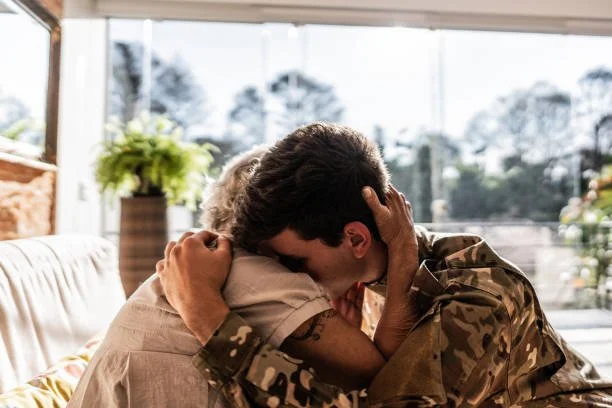
Empathy Misses in Complex Trauma: Why We Minimize, Fix, and Explain, and How to Listen Instead
We all want to be empathetic, but sometimes our best intentions miss the mark. In this article, we uncover the most common empathy misses, from minimizing to fixing to explaining, and show you how to truly listen without disconnecting. Read until the end to learn how your nervous system shapes empathy, how to repair after a miss, and why sitting in someone's pain without rushing to solutions is the most compassionate gift you can give.

Empathy and Complex Trauma: Why Feeling Others Hurts When You Haven’t Healed Yourself
You have tried to be empathetic. You have felt others' pain so deeply that you lost yourself. Or you have gone numb and then judged yourself for not caring enough. Neither is a personal failure. Both are signs of an unregulated nervous system shaped by complex trauma. In this article, we walk you through what real empathy looks like, why your survival brain keeps blocking it, and how regulated empathy, not more empathy, is the true path to healing. Read until the end. The aha moment is waiting.

Complex Trauma and the Longing-Fear Paradox: Why Survivors Want Connection but Pull Away
If you have lived with complex trauma, you may have asked yourself a painful question more times than you can count. Why do I want connection so badly, but the moment someone gets close, I feel the urge to run? You are not broken. You are not impossible to love. You are experiencing one of the most common and confusing symptoms of complex trauma: the longing for intimacy paired with the terror of it.
This internal war is exhausting, but it is not a sign of failure. It is a survival adaptation that once kept you alive. In this article, we walk you through the real reason behind the push-pull dynamic, how pseudo intimacy keeps you stuck, and the gradual, compassionate path to retraining your nervous system for true connection.
Read to the end. Because the pull away does not have to be the final word. You can learn a new way.

The Shame of Growing Up with a Narcissistic Mother: Understanding Complex Trauma, People-Pleasing, and Learning to Trust Again
What if the very person who was supposed to love you unconditionally told you, at age eight, that you never would be loved that way? What if your mother mocked your vulnerability, ignored your needs, and made love feel like something you had to earn? That is the reality of growing up with a narcissistic mother. And the shame from that childhood does not just disappear. It follows you into every relationship, making you assume people are using you, that your trust will be betrayed, that you are fundamentally unlovable.
But here is the truth we want you to hold onto: your nervous system can be retrained. Your shame can be healed. And you can learn to trust again, not by flipping a switch, but by taking small, brave steps toward safe people. In this article, we walk you through the exact process, from understanding complex trauma and fawning to practical tools for reparenting yourself and finding genuine connection.
Keep reading. There is a way through. And you are not alone.