



BLOG: EXPLORE MORE COMPLEX TRAUMA TOPICS
Deepen your understanding with these articles on key aspects of complex trauma learning and recovery.

The Making of a Narcissist: How Childhood Wounds Forge an Armoured Existence
Discovering that someone you care about is a narcissist can leave you feeling confused and deeply hurt. But what if their behavior isn't a sign of inherent evil, but a tragic survival strategy forged in childhood?
In our latest article, "The Making of a Narcissist," we delve beyond the symptoms to uncover the heartbreaking why. We explore how profound childhood trauma forces a developing soul to build impenetrable armor, creating the empty core and controlling exterior that defines the narcissist.
This is not an excuse for their harmful actions, but a key to understanding them. To learn how deep shame and "soul murder" explain everything from their grandiosity to their lack of empathy, read on. The insights you'll gain by reading to the end are crucial for anyone seeking to heal from complex trauma and rebuild their sense of self.

Understanding Complex Trauma: More Than Repeated Events, It's a Wound to the Core of Self
You've read the clinical definitions of Complex Trauma, but what if the real wound isn't just the events themselves, but how they reshaped your very sense of self? This isn't just about what happened; it's about why you feel so fundamentally changed. We explain the profound signs and, more importantly, the clear path to healing that awaits you at the end of this article.

Is Your Relationship Falling Apart? The Unseen Role of Complex Trauma
Do you find yourself constantly questioning your relationship, wondering if it's just a 'rough patch' or something more? For those with complex trauma, this confusion is all too familiar. The real sign a relationship is in critical danger isn't a single fight, but a slow, internal process: the 'closing of the heart.'
In this crucial guide, we explore the hidden dynamics—like harsh startups, the 'Four Horsemen' of communication, and emotional flooding—that signal a relationship is breaking down. But it's not all bleak. We also provide a clear-eyed path forward, helping you discern if your relationship can be salvaged or if your healing requires a different, courageous choice.
To understand the full picture and find the clarity you're searching for, we highly recommend reading this essential article to the very end.

The Procrastination Paradox: How Complex Trauma Fuels Avoidance and the Power of Self-Compassion to End the Cycle
If you see yourself as lazy because you procrastinate, it's time for a profound and liberating shift in perspective. What looks like avoidance is actually a brilliant, protective mechanism wired into your nervous system by past trauma. This article will guide you through the "why"—revealing the seven protective personas behind your procrastination—and lead you to the "how," offering a compassionate path to calm your nervous system and reclaim your agency. The understanding you'll gain by the end is not just about getting things done; it's about finally feeling safe enough to begin.

The Compulsion to Say Yes: How Complex Trauma Fuels People-Pleasing and How to Set Boundaries Without Guilt
If you find yourself saying "yes" when your entire being is screaming "no," you are not simply too nice. You are likely operating a sophisticated survival strategy that was coded into your nervous system long ago.
This isn't just about being agreeable; it's about a deep-seated compulsion born from a need to feel safe. For those with Complex PTSD (C-PTSD), people-pleasing isn't a choice—it was a necessary adaptation for survival.
But what if you could understand this exhausting pattern, not as a flaw, but as a protective shield you can now gently learn to set down? What if you could discover a way to say "no" that feels not like a betrayal of others, but like a long-overdue homecoming to yourself?
Keep reading to discover the profound link between complex trauma and people-pleasing, and the compassionate, practical steps to reclaim your life, your energy, and your authentic voice—without guilt.

The Tomorrow Trap: How Complex Trauma Fuels Procrastination and Avoidance
If you constantly battle the voice that says, "I'll do it tomorrow," only to feel trapped in a cycle of avoidance and guilt, it's crucial to understand this: what if it's not a lack of willpower, but a wiring in your brain from past trauma? This isn't about laziness; it's about a survival brain stuck on high alert.
In this article, we uncover the hidden link between a chaotic childhood and adult procrastination, and reveal a compassionate path to rewire your brain for consistency. The insights ahead could change your entire approach to healing—read on to discover how.

How Complex Trauma Distorts Your Map to Connection
We often mislabel acquaintances as close friends and tolerate unhealthy dynamics, all thanks to a flawed internal guide. If you use 'time spent together' or 'shared history' to gauge closeness, you are using the wrong map. Learn the single, correct parameter for defining a true, soul-nourishing connection and avoid the heartache of misplaced trust. The insight you'll gain by the end of this article will change how you see every relationship in your life.

A Compassionate Guide to Processing the Anger from Childhood Trauma | Complex PTSD
If you've ever tried to "count to ten" when angry only to fail miserably, it's not a lack of willpower. For survivors of childhood trauma, anger isn't a simple emotion to manage—it's a warning signal from a deep well of unresolved pain.
This article reveals the vicious cycle of trauma-based anger and why traditional advice falls short. More importantly, it offers a compassionate roadmap to finally process that anger and reclaim your peace.
Read to the end to discover how to understand your triggers, replenish your emotional energy, and begin dissolving the deep-seated "lava" of pain for good. Your journey to healing starts here.

How the Dysfunctional Dependent and the Chief Enabler Perpetuate Complex Trauma
In a dysfunctional family, we often blame one parent as the 'problem.' But what if the true engine of lasting trauma is the unseen collaboration between two roles: the overtly aggressive Dysfunctional Dependent and the covertly compliant Chief Enabler? One creates the storm, but the other quietly locks all the exits, teaching children to deny their own reality.
This is the toxic nucleus of complex trauma. To understand how these roles silently shaped your past and may still be governing your relationships, read on. The insight you gain may be the key to your freedom.

Why Procrastination Is a Symptom of Complex Trauma and the Path to Healing
You call it procrastination. You tell yourself you'll do it later. You find a million other things to do. But have you ever stopped to consider that the very words we use for this habit—avoidance, hesitation, stalling, dragging your feet—are not just synonyms? They are clues.
They are clues pointing to a deeper truth: that chronic procrastination is rarely a simple failure of time management or a character flaw. It is often a sophisticated protective mechanism, a symptom of something deeper that logic alone can't solve.
We've compiled a complete list of these synonyms, each one a piece of the puzzle. But to truly understand the why behind the delay, and to discover the one word that changes everything—the word that connects procrastination to a nervous system response shaped by past experiences—you need to read to the end.

Being Brave Enough to Pause When The World Keeps Spinning
What if your exhaustion isn't a sign you're failing, but a signal you're surviving on autopilot? We often lean on external validation—paychecks, status, followers—to measure our worth, but it leaves us empty. This article explores how to break free from the destructive cycle of productivity and unlock the science-backed power of intentional rest. Keep reading to learn the 5 types of rest you need and how they can heal your mind and body.

Rebuilding Trust and Commitment After Complex Trauma
If you're healing from complex trauma, you know the feeling that the ground beneath you is never entirely solid. But what if the most important relationship you need to repair is the one you have with yourself? True healing begins not with a feeling, but with a promise—a conscious, daily commitment to the parts of you that were taught they were unworthy. Discover the practical, step-by-step plan to rebuild the foundation of trust and commitment within yourself. The first step towards an unshakable future is waiting for you just beyond the next paragraph. Keep reading to learn how to build it.

How Courage Rewires a Brain Shaped by Complex Trauma
What if the most powerful tool to break free from complex trauma isn't something you find, but something you practice? We often believe courage is the absence of fear. But if you're healing from a painful past, you know fear is a constant companion. True courage is far more profound—and accessible—than you might think. It's the conscious, daily choice to do the right thing in the midst of the fear that once controlled you.
This isn't about grand gestures. It’s about the moment you choose to send a text asking for help instead of isolating. It’s the bravery to say "no" and risk discord to protect your peace. It’s the decision to rewire your brain’s deepest survival instincts.
Discover how courage moves from a concept to a practical tool for healing. Learn how each small, brave act physically rebuilds resilience and reclaims your life from trauma’s grip. Your journey to becoming isn't about being fearless; it's about learning to be brave. Read on to find out how.

How Cognitive Dissonance Makes You Feel Crazy for Doing What's Healthy
Have you ever finally set a healthy boundary, only to be crushed by a wave of guilt? Or tried to relax, only to feel a nagging voice call you lazy and selfish? This isn't a character flaw—it's a survival mechanism called cognitive dissonance, and for those with complex trauma, it’s the mental battlefield where doing what’s right feels terrifyingly wrong.
Your gut says one thing, but the echoes of your past scream another. This internal civil war is what keeps so many stuck in cycles of anxiety and self-doubt. But what if you could understand its origin and, finally, retrain your brain to side with your health instead of your history?
Discover how the lies of the past are hijacking your present—and how you can start silencing them for good. The explanation ahead is a crucial key to unlocking your recovery.

The Soul Cost of Procrastination: Untangling Money Stress from Complex Trauma
That unopened bill on your counter? The knot in your stomach when you think about your bank account? This isn't just procrastination. For survivors of complex trauma, financial avoidance is a profound emotional shutdown—a protective freeze response to something that feels life-threatening.
You're not avoiding the money. You're avoiding the tsunami of shame, fear, and painful self-beliefs you're convinced it will confirm.
But what if you could break the cycle? Discover the hidden reasons your brain links money to survival and learn the first step toward transforming your financial anxiety into financial peace.
Your journey to understanding starts here. Read on to uncover the deep connection between your past and your present financial stress, and find the compassionate path forward.

How Complex Trauma Fuels Hoarding and Procrastination
If you see your clutter, procrastination, or hoarding as a personal failing—a sign of being "lazy" or "broken"—the story you're telling yourself is a lie.
The mess isn't the problem. It's a symptom.
It is the visible sign of a nervous system that has been working too hard, for too long, to protect you from past pain. Hoarding and procrastination are not character flaws; they are ingenious, albeit misguided, survival strategies born from complex trauma.
What if the very thing you beat yourself up for is actually a testament to your incredible will to survive? What if understanding the link between complex trauma and hoarding is the first step to unlocking a freedom you thought was impossible?
Your journey to understanding why the mess isn't your fault—and what to do about it—starts here. Keep reading to discover the path toward compassion and healing.

From Barely Surviving to Finally Thriving: Reclaiming Your Life After Complex Trauma
Do you ever feel like you have a pulse but aren't truly alive? For those healing from complex trauma, this feeling is all too familiar. It’s the exhausting gap between merely surviving and truly thriving. You might be going through the motions, yet feel a deep emptiness inside, mistaking fleeting pleasures for real happiness.
But what if this isn't all there is? What if you could move from that constant state of survival mode into a life of vibrant connection and purpose? The journey begins by understanding the crucial difference between two ancient Greek words for life: Bios (merely existing) and Zoe (fully alive).
We uncover the 12 subtle danger signs that you're sliding back into survival mode and map out the compassionate, practical path to reclaiming your life. This isn't about just reducing symptoms—it's about learning how to thrive. Read on to discover how.

The 68 Needs Your Complex Trauma Neglected: A Roadmap to Reparenting Yourself
Have you ever felt a deep, unnamed ache—a sense that something fundamental was missing from your life, even if you couldn't quite pinpoint what? For those healing from complex trauma, this void is all too familiar. We often try to fill it with relationships, achievements, or distractions, but the relief never lasts.
What if this feeling wasn't just a vague emptiness, but the collective cry of dozens of specific, unmet human needs? Drawing on over 21 years of work with complex trauma, expert Tim Fletcher reveals that the journey to wholeness is mapped by 12 core categories of need. But within them lies the real key: a detailed framework of 68 specific, non-negotiable needs that must be understood and met to truly heal.
This is more than a theory; it's a practical and compassionate reparenting checklist for your nervous system, your heart, and your life. If you're ready to move beyond survival and finally understand what it takes to build a healthy, whole life, read on. Your roadmap to wholeness awaits.

How Complex Trauma Drives Self-Sabotage at Work - The Invisible Wall
Do you ever find yourself stuck in a frustrating loop at work? You set a goal, only to procrastinate until panic sets in. You push yourself to exhaustion, believing you must earn your rest. You receive feedback and feel a hot wave of shame, as if you’ve been personally exposed.
If this sounds familiar, please hear this: This is not a lack of willpower. These patterns are often ancient protection strategies, deeply wired into your nervous system by complex trauma. They are your body’s well-intentioned, but outdated, attempt to shield you from a danger it expects to come.
You are not broken. You are adapted. And the good news is that adaptation can be rewired with compassion and awareness. Read on to find out how.
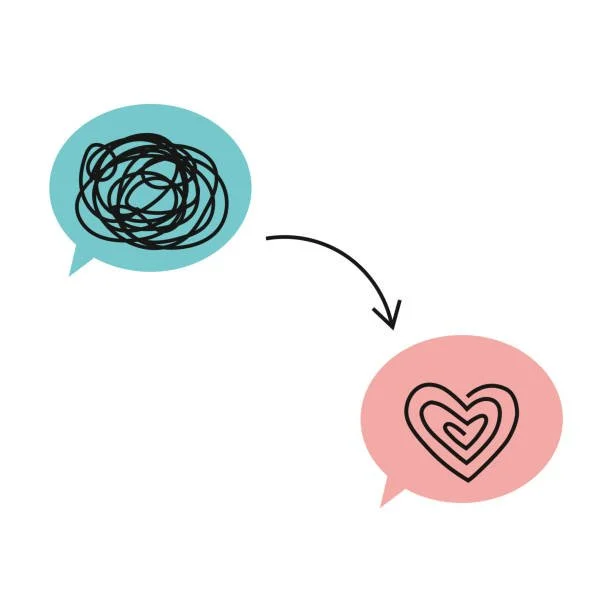
THE DISTORTED LOVE LANGUAGES OF TRAUMA
You know the 5 love languages, but have you heard the 12 distorted ones?
Trauma creates hidden, painful ways of loving—like hurting others to prove loyalty or silencing yourself for approval. If you’ve ever felt love must be earned through sacrifice, this is a must-read to the end to discover the path to gentle healing.