Introduction to the 12 Basic Needs
Many people carry a persistent sense that something is missing.
It can show up as restlessness, emptiness, or a feeling that life never quite settles, even when things look fine on the outside. You might question why you feel this way, or assume it’s just part of who you are.
This course introduces the idea that much of that experience can be understood through unmet needs. It looks at how human needs are meant to function, what happens when they are consistently met, and what changes when they are not. You’ll learn how unmet needs create ongoing tension rather than resolution, how people adapt when needs go unanswered, and how common coping patterns can develop as attempts to fill something that was never fully addressed.
The goal is to give you a clearer way to understand what may be underneath the patterns you already notice. To help you recognize that discontent often has roots, and to begin separating your identity from the ways you learned to cope. This course is about making sense of the internal pressure to “fix” yourself by instead asking what may have been missing.
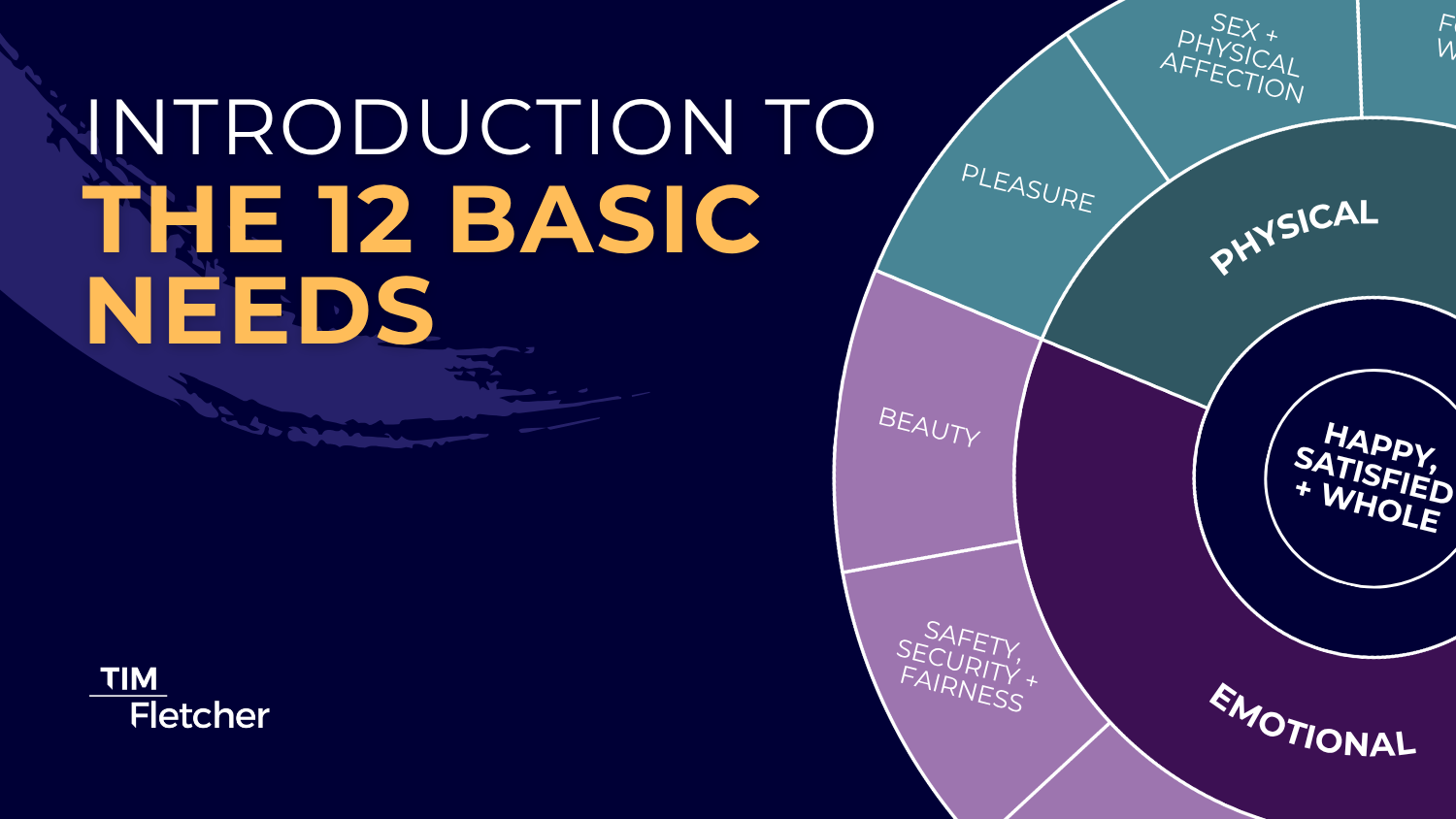
What are the 12 Basic Needs?
Get Access with the EVERGREEN Membership
Get unlimited access to Tim Fletcher Co’s Evergreen library for just $30 per month, or $300 per year. With new self-development courses added every month, you’ll always have fresh, practical tools to support your growth in areas like trauma recovery, boundaries, relationships, and personal transformation. Learn at your own pace, revisit lessons anytime, and build lasting change with guidance that’s both compassionate and deeply practical. See more details here.
*All prices are in Canadian Dollars.
Course Curriculum
-
You may feel a sense of emptiness or longing but also feel embarrassed for needing anything at all. Wanting comfort, reassurance, or connection can feel like a problem instead of something natural.
This module reframes needs as part of healthy human development, showing how they are meant to guide behaviour and return a person to calm when they are understood and responded to.
In this module you’ll:
Revisit the idea that your needs were real, human and worthy of attention.
Identify needs as part of healthy human development rather than weakness or selfishness.
Understand that children are meant to express needs and return to calm when those needs are met.
Begin changing the narrative from “I was too needy” to “I had legitimate needs.”
Connect this understanding to present-day patterns of longing, emptiness, shame or confusion about what you need.
Lesson • Video • Journal
-
You may notice that stress, restlessness, or emotional tension never fully settles, even when nothing obvious is wrong. It can feel like something important never quite resolves.
This module contrasts how needs function in responsive environments versus trauma environments, showing how unresolved needs create ongoing stress and shape patterns like over-adapting, independence, or emotional shutdown.
In this module you’ll:
Revisit the difference between a healthy home and a Complex Trauma home.
Identify what happens when needs are consistently met, and what happens when they are not.
Understand that unresolved needs create stress and shape how a child adapts.
Begin changing the narrative from “I should not feel this way” to “Something important may have gone unresolved.”
Connect unmet needs to present-day patterns of stress, restlessness, insecurity or emotional confusion.
Lesson • Video • Journal
-
You may feel like something is missing but not know how to name it. The sense of discontent can feel vague, without clear categories to make sense of what you’re actually needing.
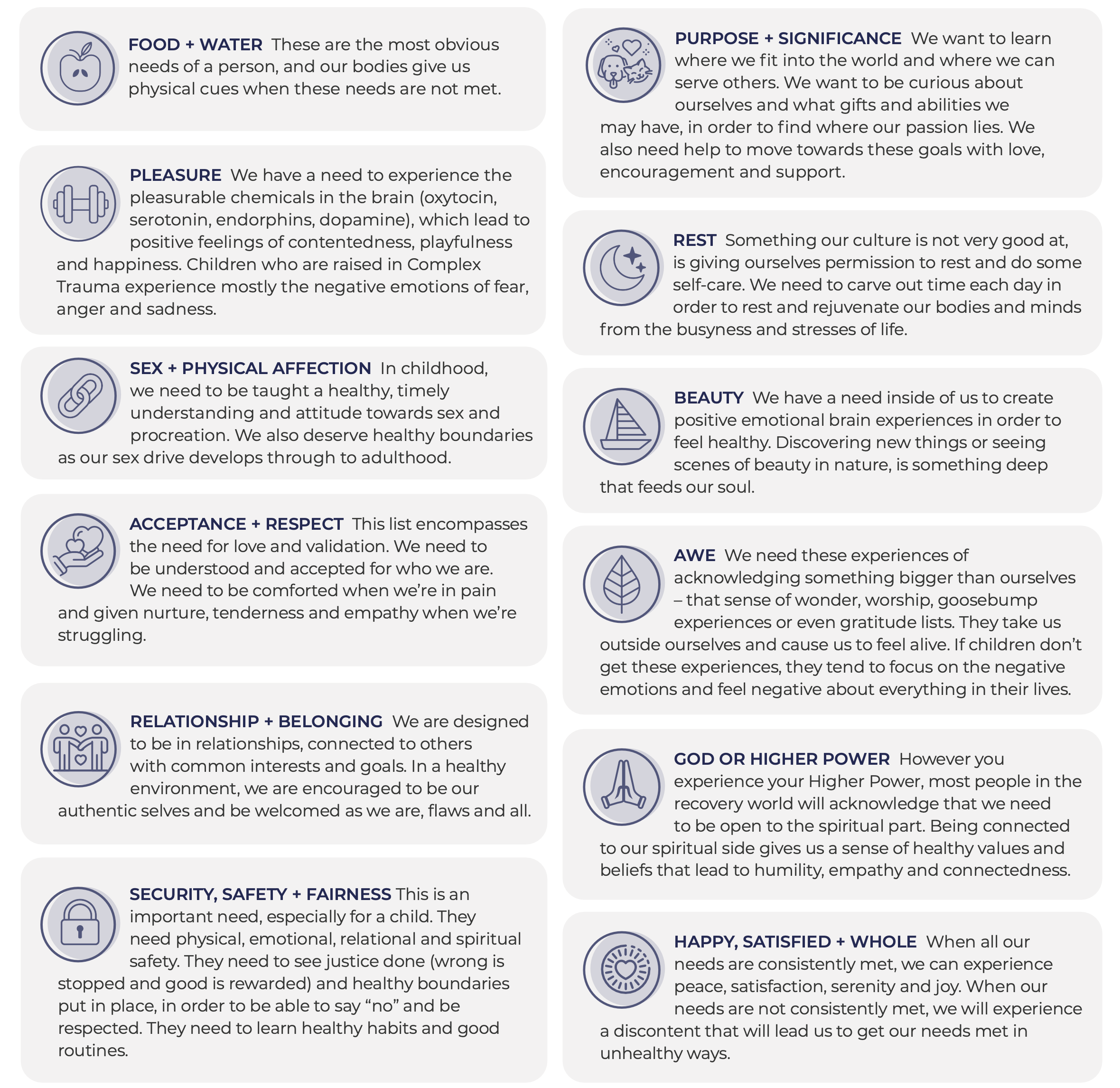
This module introduces the full map of needs across physical, emotional, relational, and spiritual areas, helping you recognize where different forms of longing, satisfaction, or imbalance show up in your life.
In this module you’ll:
Revisit the broad categories of needs that shape human life.
Identify the 12 Basic Needs in a simple overview.
Understand that these needs include physical, emotional/relational and spiritual dimensions.
Begin changing the narrative from “I only needed the basics” to “I needed more than survival.”
Connect the 12 Needs framework to your own sense of longing, satisfaction or missing pieces.
Lesson • Video • Journal
-
You may carry a steady sense of emptiness, restlessness, or dissatisfaction without knowing why. Even when life seems stable, something can still feel unresolved underneath.
This module explains how unmet needs create ongoing discontent, how the brain continues searching for relief, and how adaptation can hide needs without actually resolving them.
In this module you’ll:
Revisit the emotional impact of needs that were not consistently met.
Identify how unmet needs create discontent, emptiness and continued stress.
Understand that unmet needs often lead to adaptation rather than resolution.
Begin changing the narrative from “Something is wrong with me” to “Something important may have been missing.”
Connect unmet needs to present-day patterns of shame, overcompensation, insecurity or emotional hunger.
Lesson • Video • Journal
-
You may notice patterns that feel hard to change, even when you understand they aren’t helping. The behaviour may bring short-term relief, but the underlying feeling doesn’t go away.
This module explores how real needs get met through substitutes, how those patterns form, and how shifting the focus from behaviour to underlying need changes how healing begins.
In this module you’ll:
Revisit the ways you may have tried to meet legitimate needs through unhealthy substitutes.
Identify how unmet needs can lead to overcompensation, mixed-up needs and addiction-like patterns.
Understand that real needs can be pursued in unhealthy ways when a person does not know how to meet them well.
Begin changing the narrative from “Why do I keep doing this?” to “What need might I be trying to meet?”
Connect this understanding to the hope of learning healthier need-meeting over time.
Lesson • Video • Journal