The 12 Basic Needs: Your Roadmap to Healing from Complex Trauma
Do you ever feel like something is fundamentally missing, but you cannot quite name it? Maybe you find yourself constantly exhausted, navigating relationships with a deep fear of being hurt, or living in a mode of people-pleasing that leaves you feeling empty. These feelings are often not a sign of failure or weakness. Instead, they are likely the echoes of unmet needs.
Complex trauma has a way of quietly stealing our ability to recognize and fulfill our most basic human requirements. When our childhood environment was unpredictable, neglectful, or abusive, our energy went entirely toward survival. We learned to ignore our internal cues for hunger, rest, and safety because paying attention to them was not safe or even possible. As adults, this leaves us disconnected from ourselves, struggling with burnout, and repeating painful patterns.
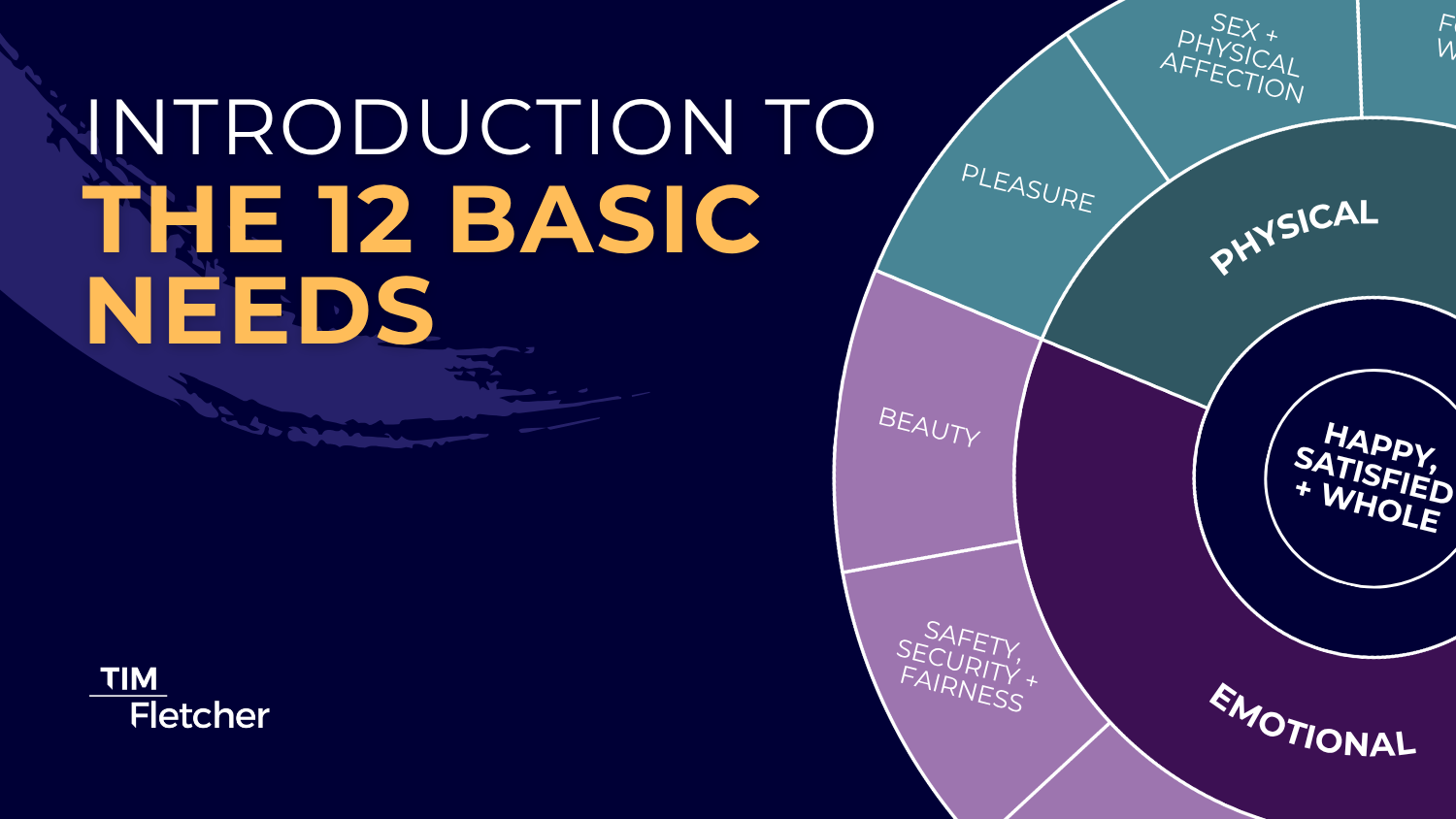
Healing from complex trauma is not just about managing symptoms. It is about rebuilding the foundation of your life by learning to meet your core needs. The 12 Basic Needs offer a roadmap for this journey. They are the core emotional, relational, and developmental needs every person is born with. When these needs are consistently met, we experience peace, satisfaction, and joy. When they are not, we experience a deep discontent that leads us to try to get them met in unhealthy ways.
Understanding these needs can change how you make sense of trauma, addiction, and recovery.
What Are the 12 Basic Needs?
Let us walk through each one and explore what it really means for your healing journey.
1. Food + Water
These are the most obvious needs of a person, and our bodies give us physical cues when these needs are not met. Yet for many trauma survivors, the simple act of eating and drinking can be complicated. We might skip meals, binge eat, or have a difficult relationship with hunger cues because we learned to dissociate from our bodies.
Reconnecting with the physical cues of hunger and thirst is a profound act of self-care and re-parenting. It means learning to listen to your body again and treating it with kindness.
2. Pleasure
We have a need to experience the pleasurable chemicals in the brain, oxytocin, serotonin, endorphins, and dopamine. These lead to positive feelings of contentedness, playfulness, and happiness. These feelings are not a luxury. They are a biological need.
Children raised in complex trauma experience mostly negative emotions like fear, anger, and sadness. As adults, we may feel guilty for allowing ourselves to have fun or feel joy. It is vital to intentionally bring activities into your life that create a sense of pleasure and playfulness. This is not selfish. It is healing.
3. Sex + Physical Affection
In childhood, we need to be taught a healthy, timely understanding and attitude towards sex and procreation. We also deserve healthy boundaries as our sex drive develops through to adulthood.
For survivors, this need can be a source of significant shame and confusion. Healing involves re-establishing a sense of safety and agency over your own body. It means developing boundaries that allow for intimacy without fear. This is a gentle, gradual process that requires patience with yourself.
4. Purpose + Significance
We want to learn where we fit into the world and where we can serve others. We want to be curious about ourselves and what gifts and abilities we may have, in order to find where our passion lies. We also need help to move towards these goals with love, encouragement, and support.
When we are trapped in survival mode, we often lose sight of our passions. Reconnecting with what makes us feel significant is a powerful step in the healing journey. It is about discovering that you have something unique to offer the world.
5. Rest
Something our culture is not very good at is giving ourselves permission to rest and do some self-care. We need to carve out time each day in order to rest and rejuvenate our bodies and minds from the busyness and stresses of life.
For those of us who are used to being on high alert, resting can feel uncomfortable or even dangerous. Learning to give yourself permission to rest without guilt is a radical and necessary act of healing your nervous system. Your body needs this. Your mind needs this.
6. Beauty
We have a need inside of us to create positive emotional brain experiences in order to feel healthy. Discovering new things or seeing scenes of beauty in nature, art, or music feeds our soul. It pulls us out of our heads and into a state of wonder.
Actively seeking out beauty is a way to regulate your nervous system and remind yourself that there is goodness in the world. It can be as simple as watching a sunset, listening to a piece of music that moves you, or visiting a garden.
7. Acceptance + Respect
This list encompasses the need for love and validation. We need to be understood and accepted for who we are. We need to be comforted when we are in pain and given nurture, tenderness, and empathy when we are struggling.
In the context of complex trauma, we may have been taught that we are fundamentally broken or unworthy. Healing means finding people who see us and respect us. It also means learning to extend that same acceptance to ourselves. This is the heart of reparenting after complex trauma.
8. Relationship + Belonging
We are designed to be in relationships, connected to others with common interests and goals. In a healthy environment, we are encouraged to be our authentic selves and welcomed as we are, flaws and all.
Complex trauma often leads to an intense fear of trust and intimacy, making relationships seem dangerous. Yet it is through safe, healthy relationships that we heal. Rebuilding your capacity for connection is a cornerstone of recovery. It starts with small steps and gentle trust-building.
9. Security, Safety + Fairness
This is an important need, especially for a child. They need physical, emotional, relational, and spiritual safety. They need to see justice done, wrong is stopped and good is rewarded, and healthy boundaries put in place. They need to learn healthy habits and good routines.
A lack of safety and fairness in childhood creates a world that feels terrifying and unpredictable. As adults, we can begin to create safety for ourselves by establishing routines, setting boundaries, and learning to say no and be respected.
10. Awe
We need experiences of acknowledging something bigger than ourselves. That sense of wonder, worship, goosebump experiences, or even gratitude lists takes us outside ourselves and causes us to feel alive.
If children don't get these experiences, they tend to focus on the negative emotions and feel negative about everything in their lives. Reconnecting with awe is a powerful way to shift perspective and find hope. It reminds us that we are part of something larger.
11. God or Higher Power
However you experience your Higher Power, most people in the recovery world acknowledge that we need to be open to the spiritual part of ourselves. Being connected to our spiritual side gives us a sense of healthy values and beliefs that lead to humility, empathy, and connectedness.
This does not have to be religious. It can be a connection to nature, the universe, or a set of core values that ground you. It is about finding meaning beyond yourself.
12. Happy, Satisfied + Whole
When all our needs are consistently met, we can experience peace, satisfaction, serenity, and joy. This is the state of wholeness that is the goal of the healing journey.
When our needs are not consistently met, we will experience a discontent that leads us to get our needs met in unhealthy ways. This is often how addiction, people-pleasing, and destructive relationships develop. Recognizing this connection is the first step toward change.
Answering Your Questions About Complex Trauma and Needs
Let us address some common questions that come up for people on this healing journey.
Why do I feel so exhausted and burnt out all the time?
Because your need for Rest has been chronically unmet. You have been running on empty for so long that it has become your normal. You are likely living in a constant state of high alert, and your nervous system is screaming for a break.
Complex trauma keeps your nervous system stuck in fight or flight mode. This is a survival adaptation that served you in the past. But now, it is draining your energy. Learning to rest is learning to tell your nervous system that you are safe now.
Why do I struggle so much with trust and intimacy?
Because your needs for Security, Safety, and Relationship + Belonging were likely violated in the past. It makes perfect sense that you are afraid to trust. Your brain learned that people are not safe.
Healing involves slowly creating new, safe experiences that can rewire this belief. This is not about blindly trusting everyone. It is about learning to discern who is safe and allowing yourself to connect with them.
Why do I feel so empty and lack direction in life?
Because your need for Purpose + Significance and Awe may be unmet. You may have never been given the space to explore your passions or feel a sense of wonder.
Your healing journey involves rediscovering these parts of yourself. It is about being curious about your gifts and abilities and finding where your passion lies.
Why do I feel so much shame and anger?
Shame is often the toxic byproduct of having your fundamental needs for Acceptance + Respect denied. When we are not accepted for who we are, we internalize that as being fundamentally flawed.
Anger can be a healthy signal that a boundary has been crossed or a need is not being met. Learning to listen to these emotions as data can guide you toward what you truly need. Anger can be a protector that tells you something is wrong.
Why do I always put others before myself, even to my own detriment?
This is a common survival adaptation known as people-pleasing. You learned that keeping others happy was the only way to feel safe and secure. It was a way to manage the environment and avoid conflict.
Re-parenting yourself means unlearning this pattern and learning that your needs are just as important as anyone else's. It means learning to say no and be respected.
The Connection Between Unmet Needs and Survival Adaptations
When our needs are not met in childhood, we develop survival adaptations to cope. These are not character flaws. They are brilliant strategies that helped us survive.
For example, if your need for Safety was not met, you may have become hypervigilant, always scanning for danger. If your need for Acceptance was not met, you may have become a people-pleaser, abandoning your own needs to keep others happy. If your need for Rest was not met, you may have learned to push through exhaustion, never allowing yourself to stop.
These adaptations kept you alive. But now they are keeping you stuck.
Understanding complex trauma symptoms through the lens of unmet needs changes everything. It moves us from self-blame to self-compassion. It helps us see that our struggles are not our fault. They are the logical result of unmet needs.
How to Begin Meeting Your Needs Today
Healing from complex trauma is a journey, not a destination. Here are some practical ways to start meeting your needs.
Start small. Choose one need to focus on. Maybe it is Rest. Commit to five minutes of quiet time each day. Maybe it is Pleasure. Schedule one activity each week that brings you joy.
Listen to your body. Your body gives you signals when a need is unmet. Hunger, fatigue, tension, and restlessness are all messages. Learning to listen to them is learning to care for yourself.
Set boundaries. Boundaries are how we protect our needs. They are not about keeping people out. They are about letting in what is safe and keeping out what is not.
Find safe relationships. Healing happens in connection. Seek out people who respect your boundaries, accept you as you are, and support your healing journey.
Practice self-compassion. Reparenting after complex trauma means learning to talk to yourself with kindness. When you notice you are struggling, ask yourself what you need. Then give yourself permission to need it.
The Path Forward
These are not just abstract concepts. They are the building blocks of a life of wholeness. Reparenting after complex trauma involves learning to identify and meet these needs for ourselves, creating a solid foundation of self-love and self-care.
It is important to remember that you are not difficult or broken. Your needs were just not met. Now, as an adult, you have the power to learn what they are, understand them, and begin the courageous work of meeting them.
This is how we heal. This is how we move from mere survival to living a life filled with joy, connection, and purpose.
Your healing journey is possible. It starts with understanding your needs. And it continues with the gentle, courageous work of meeting them, one day at a time.
The Tim Fletcher Co. methodology
The Tim Fletcher Co. methodology is built on a progressive 4 Tier path to healing, recognizing that recovery is a journey that deepens over time.
Tier 1: Introductory Education. Focus: Build awareness and foundational language. Goal: Understand C PTSD basics. Recommended Starting Point:Evergreen Library for micro learning.
Tier 2: Enhanced Learning Tools. Focus: Develop agency and a deeper personal understanding. Goal: Gain practical tools with community support. Recommended Starting Point: ALIGN Courses for self guided learning. We especially recommend ALIGN With Your Needs as a foundational place to begin.
Tier 3: Immersive Recovery. Focus: Practice tools for transformation in a supported space. Goal: Experience real, lasting change. Recommended Starting Point:LIFT Online Learning, the core immersive program.
Tier 4: Supporting Others. Focus: Extend healing by equipping yourself to help others. Goal: Learn to support, serve, and lead in recovery. Recommended Starting Point: COMPASS Internship for those called to lead and serve.
If you’d like to schedule a time to speak with a member of our team you can do so here.
Whenever you’re ready, we are here for you.